
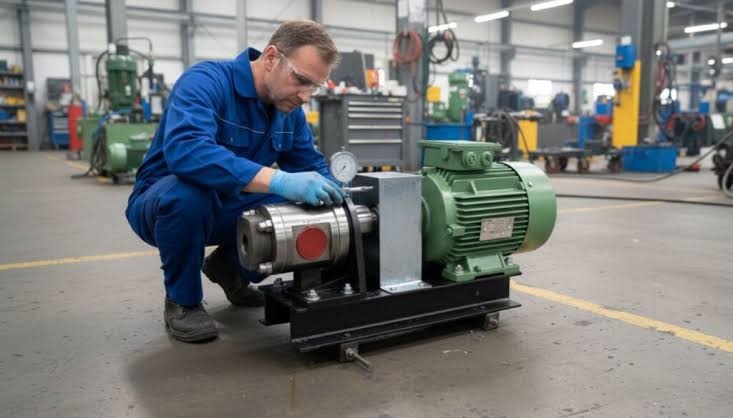
The function of an industrial gear pump typically unfolds in cycles of constant, rhythmic movement. Unlike other pumping technologies that rely on complex internal valving or high-speed impellers, these units operate on a straightforward mechanical principle: the precise meshing of gears within a housing to move fluid from an inlet to an outlet. For those who manage these systems in industrial settings, understanding how these components behave over time is essential for maintaining consistent performance and avoiding the common pitfalls of wear and operational degradation.
The Early Phase: Proper Integration and System Design
The longevity of any high-pressure gear pump often begins before the unit is even activated. When a new system is being brought online, the focus typically centers on alignment and compatibility. Because the tolerances within a gear pump are often extremely fine, even minor misalignments between the drive motor and the pump shaft can create uneven loads.
Thoughtful installation involves ensuring that the mounting base is vibration-free and that the piping connected to the inlet and outlet ports does not impose undue strain on the pump housing. In this initial stage, the goal is to establish a state of equilibrium. Practitioners often check for smooth rotation by hand before powering the unit, confirming that the fluid path is clear and that the system is properly primed to prevent dry running. This early phase is the best time to verify that the pressure relief settings are correctly calibrated to the specific fluid viscosity and system requirements, as incorrect settings can lead to premature stress on the internal gear teeth from the very first hour of operation.
What Changes as the System Progresses
As the pump enters its operational lifespan, the internal components begin to interact with the process fluid in a predictable, repetitive manner. In a healthy system, this interaction is characterized by stable pressure and smooth flow rates. However, as time passes, the subtle effects of friction and fluid properties start to manifest.
If the fluid contains even fine particulate matter, the gear faces may experience slow, cumulative erosion. Similarly, if the pump is frequently pushed toward its peak operating limits, the gear journals may undergo subtle thermal expansion and contraction. Many operators find that what was once a quiet, efficient unit may begin to exhibit a slight increase in operating temperature or a minor change in the pitch of the motor. These are not necessarily signs of failure, but rather indicators that the internal clearances are shifting. Monitoring these subtle changes is a common practice for teams that prefer to manage maintenance based on the actual health of the equipment rather than waiting for a noticeable drop in output.
Signs of Needed Adjustment or Component Evaluation
Determining when an industrial gear pump requires attention often involves listening to the system and observing the consistency of the output. When a pump begins to lose its efficiency, it is often because the internal slip—the amount of fluid that finds its way back from the high-pressure side to the low-pressure side—has increased.
Typical signs that might suggest a need for a review include:
- A reduction in flow that cannot be explained by changes in downstream demand.
- The emergence of cavitation, often indicated by a sound similar to gravel moving through the pipes, which typically suggests the inlet is restricted or the fluid is struggling to fill the gear cavities.
- Increased vibration at the drive coupling, which can indicate that the wear on the internal bearings or bushings has allowed the shafts to drift from their centered position.
- Heat buildup on the pump casing, which frequently signals that the internal friction is increasing due to insufficient lubrication or excessive wear on the gear faces.
If these signs appear, it is generally prudent to perform a thorough diagnostic of the surrounding circuit. Sometimes, the issue is not the pump itself but a clogged filter or a failing pressure control valve that is causing the pump to labor against unnecessary resistance.
Sustaining Performance Over the Longer Term
Maintaining a high-pressure gear pump in peak condition for an extended duration is rarely about one single maintenance task; it is about consistent, small-scale oversight. A proactive approach to long-term reliability often includes regular analysis of the process fluid to check for contaminants or degradation that could accelerate internal wear.
For many facilities, establishing a routine schedule for checking the drive alignment and the condition of the shaft seals can prevent smaller issues from cascading into major repairs. Seals, in particular, are common points of concern over time, as they must balance the need to hold pressure with the constant movement of the shaft. Ensuring that the seals are operating in a clean environment and are not being subjected to excessive heat or vibration can significantly extend the window of operational reliability.
Furthermore, keeping clear documentation of the pump’s operating parameters—such as typical pressure levels and power draw—creates a baseline that makes identifying future anomalies much easier. When an operator knows what “normal” looks like, deviations become apparent long before they cause a production stoppage. This institutional knowledge, combined with careful attention to the manufacturer’s guidance on lubrication and mounting, provides a solid framework for managing these pumps throughout their full useful life.
The long-term picture for these systems is one of sustained utility. By treating the pump as a component that is in constant, subtle flux, operators can move away from reactive, crisis-driven maintenance. Instead, they can foster a stable environment where the equipment is supported, monitored, and adjusted as the needs of the industrial process evolve. Investing this level of care into the infrastructure ensures that the system continues to deliver the reliable, steady flow required for demanding applications.