
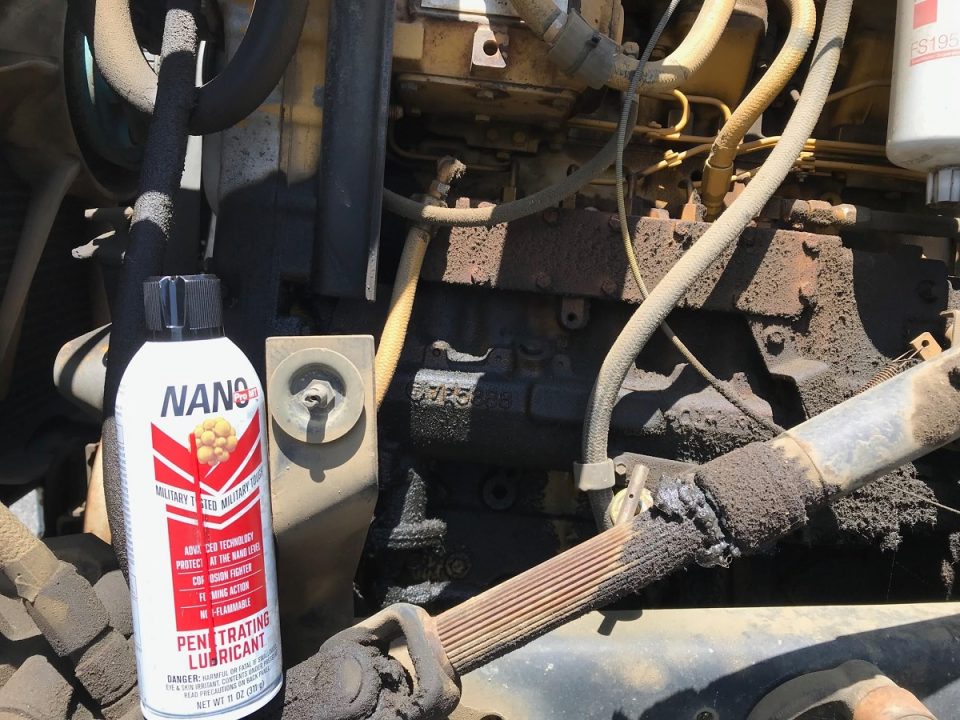
There is a long-standing belief among those who maintain machinery, vehicles, and household hardware that the most effective tool for a seized bolt is the one with the most aggressive chemical profile or the most sophisticated-sounding technical label. Many people assume that a higher price point or a flashy name implies a superior ability to break the molecular bond of stubborn, rusted fasteners. The reality of dealing with frozen hardware, however, is significantly more nuanced.
The assumptions behind high-tech surface treatments
The market is currently flooded with products claiming to utilize advanced science, such as nano penetrating oil technologies. The assumption often held by the consumer is that these “nano” particles are small enough to reach depths that traditional oils cannot, effectively “unlocking” rusted parts through sheer chemical wizardry. While modern chemistry has indeed improved the delivery systems of many lubricants, the core mechanics of how a fluid interacts with rust remain largely tied to basic physical principles: viscosity, surface tension, and the ability to displace moisture.
When a fastener is seized, it is typically held by a combination of oxidation—iron oxide—and accumulated grime or debris. A product that is marketed as a best penetrating lubricant often gains its reputation not because of a revolutionary molecular size, but because of its ability to strike a balance between thinness (to penetrate) and lubricity (to allow movement). The assumption that a specific, high-tech additive can magically liquefy years of heavy corrosion is frequently overstated. The truth is that even the most expensive lubricant typically requires time, patience, and often some form of physical feedback—like light vibration—to work its way into the threads.
Why mechanical leverage and patience matter more than product labeling
If there is a secret to success when using a best penetrating lubricant, it lies in the application process rather than the chemical composition of the bottle. Mechanical leverage, heat, and vibration are often more effective at breaking the seal of a seized part than the product itself.
When a fastener is stuck, applying a nano penetrating oil and attempting to remove the nut immediately is a common error. These fluids are formulated to migrate through microscopic gaps, a process that inherently takes time. Allowing the lubricant to “soak” for an extended period—sometimes several hours or even overnight—allows the fluid to penetrate deeper into the thread root.
Furthermore, the mechanical act of vibration helps. Tapping a seized bolt with a hammer or using an impact-style driver can create tiny gaps, allowing the best penetrating lubricant to flow further down the threads. In many cases, the combination of a thermal expansion—such as applying gentle heat—and a quality oil is more effective than relying on a high-end product alone. A knowledgeable technician understands that the product serves to reduce friction during the removal process, but it is rarely a substitute for proper physical technique.
Identifying the right product for your specific needs
How does one determine which option is truly the best penetrating lubricant? In practice, the answer depends on the nature of the seizure.
If you are dealing with a rusted manifold bolt on an engine, you are dealing with high-temperature oxidation. If you are loosening a garden gate hinge that has been exposed to years of rain, you are dealing with mineral buildup and surface rust. Different scenarios benefit from different viscosities. A very thin oil might be ideal for fine threads that are tightly packed, whereas a slightly thicker lubricant might be better for larger, rougher hardware where there is more volume to cover.
When looking at a bottle, consider the following general guidance:
- Application Method: Does the spray nozzle allow for precise application? Getting the oil exactly where the threads meet is more important than how many “nano” particles are in the formulation.
- Surface Compatibility: Ensure the product is safe for the materials involved, particularly if there are rubber seals, plastic components, or specialized coatings nearby.
- Time Requirement: Does the product claim to work instantly? A product that works quickly often has a lower flash point or thinner viscosity, which can be useful in some scenarios but may lack the long-term staying power of a heavier blend.
Asking a local hardware expert about what is typically used in the region for local weather conditions—which can impact how rust forms—is often more useful than relying on marketing claims found on a label.
Reframing how you approach seized hardware
Moving forward, it is helpful to shift your mental model of what these products actually do. Think of a nano penetrating oil not as a “fix” that dissolves metal, but as a medium that alters the interface between two surfaces. Its job is to provide enough lubrication to overcome the static friction of the rust so that you can move the part without snapping the fastener or stripping the threads.
The most effective approach is to view the maintenance process as a sequence:
- Assess: Clean away the loose debris surrounding the fastener.
- Apply: Use a quality best penetrating lubricant and allow for adequate soak time.
- Vibrate: Use controlled mechanical force to help the fluid migrate.
- Extract: Apply steady, consistent pressure rather than sudden jerks.
By abandoning the hope that one miracle liquid will solve every mechanical failure, you gain the ability to troubleshoot more effectively. The hardware in your home or shop is susceptible to the environment over time, and regular, proactive lubrication—before a part becomes completely seized—is generally the most efficient strategy.
The next time you reach for a bottle to address a rusted part, resist the urge to choose based on aggressive marketing or claims of futuristic technology. Instead, choose a reliable product, understand the mechanical constraints of the joint you are working on, and give the process the time it needs to work. The “best” solution is usually found in the intersection of patience, mechanical understanding, and the sensible application of the right tool for the specific job at hand.