
Modern office life in Singapore revolves around long hours of sitting, tight deadlines, and continuous screen exposure. Over time, this routine takes a toll on posture, leading to back pain, neck stiffness, and shoulder discomfort. Many professionals do not realise that these issues are not just temporary aches—they are signals that the body is struggling to maintain proper alignment. Fortunately, regular workouts at a gym Singapore can help reverse years of poor posture and prevent future strain. By integrating posture-focused exercises into your weekly routine, you can retrain your muscles, relieve pain, and regain mobility that supports your daily performance both in and out of the office.
Understanding the Posture Problem in Singapore’s Work Culture
Office workers in Singapore typically spend over eight hours a day seated in front of a computer. The average workspace setup often encourages forward head posture, rounded shoulders, and inactive glutes. Over time, these habits create muscle imbalances—tight chest and hip muscles, weak back and core muscles—which affect how the body supports itself. Poor posture not only looks unbalanced but also increases the risk of chronic pain and fatigue. The human body is designed to move. When it stays in a seated position for too long, blood flow slows, joints stiffen, and muscles lose their natural strength. This is why even short gym sessions can help reawaken these dormant muscles and restore postural balance.
The Role of Exercise in Correcting Posture
Training at the gym is one of the most effective ways to correct posture because it allows you to isolate weak muscles and strengthen them under controlled conditions. Unlike stretching alone, resistance-based exercises teach your body to hold itself correctly throughout the day. A well-rounded program includes mobility work, strengthening routines, and posture awareness drills. Many Singapore gyms offer equipment that specifically targets the back, shoulders, and core—areas most affected by office life. When done correctly and consistently, these exercises can help realign your spine, improve breathing, and reduce strain from prolonged sitting.
The Core: The Foundation of Good Posture
The core is more than just your abdominal muscles. It includes your lower back, obliques, and the deep stabilising muscles around your spine and pelvis. Strengthening these muscles is essential for maintaining upright posture and preventing slouching. When your core is strong, your spine can stay neutral even during long hours of sitting or standing.
Recommended Core Exercises for Office Workers
-
Plank Variations: Engage multiple muscle groups to build endurance and spinal stability.
-
Dead Bug: Strengthens the deep abdominal muscles while teaching spinal control.
-
Bird Dog: Improves coordination and strengthens the lower back.
-
Cable Woodchop: Builds rotational strength that supports posture during daily movement.
Perform these exercises two to three times a week, focusing on form rather than speed. A strong core allows you to sit taller and move with confidence throughout your day.
Strengthening the Back and Shoulders
A common issue among Singaporean office workers is rounded shoulders, caused by tight chest muscles and weak upper back muscles. The solution is to strengthen the muscles that pull your shoulders back while stretching those that pull them forward. Regular training at the gym can help reverse this imbalance and reduce pain.
Effective Back and Shoulder Exercises
-
Seated Row: Focuses on the mid-back muscles responsible for pulling the shoulders into alignment.
-
Face Pulls: One of the best exercises for strengthening the rear deltoids and rotator cuff.
-
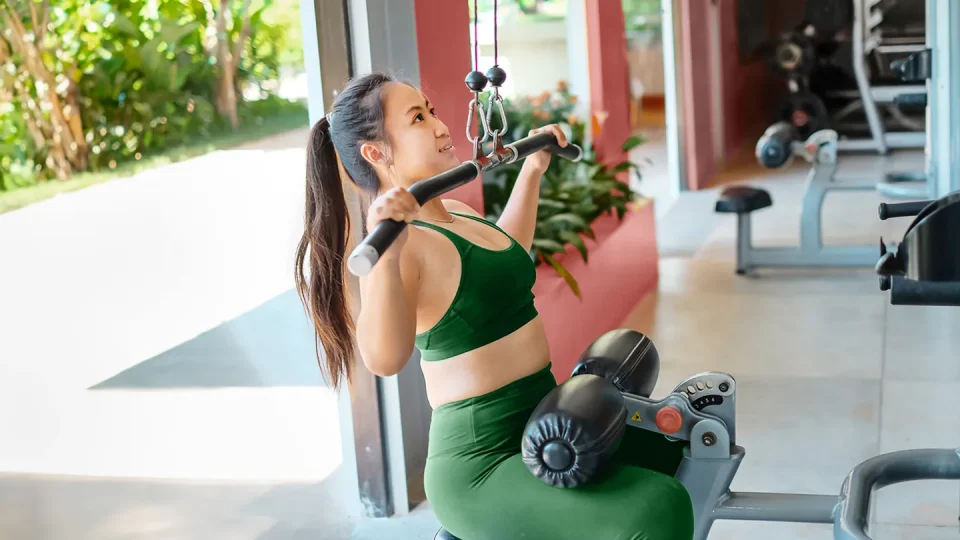
Lat Pulldown: Builds strength in the upper back and encourages a more upright posture.
-
Reverse Fly: Strengthens the smaller stabilising muscles of the shoulders.
These exercises not only correct rounded shoulders but also improve posture while walking or sitting. Over time, you will notice better alignment and reduced tension in your upper body.
Mobilising the Hips and Lower Body
Long hours of sitting cause the hip flexors to tighten, while the glute muscles weaken. This combination tilts the pelvis forward, leading to lower back strain and reduced core activation. Strength training that focuses on the glutes and legs is crucial for restoring pelvic alignment.
Key Lower Body Exercises
-
Lunges: Improve hip mobility while activating the glutes and quads.
-
Glute Bridge: Strengthens the glutes and reduces anterior pelvic tilt.
-
Romanian Deadlift: Builds hamstring and lower back strength while teaching proper hip movement.
-
Step-Ups: Functional exercise that enhances balance and stability.
Incorporating these moves into your workout can restore your body’s natural alignment and ease lower back pain caused by sitting too long.
The Importance of Flexibility and Mobility
Flexibility plays an important role in maintaining good posture. Stiff muscles restrict movement, causing compensations that lead to further imbalance. For office workers, tightness in the chest, hip flexors, and hamstrings is most common. Spending a few minutes after your gym session to stretch these muscles helps prevent stiffness and improves posture throughout the day.
Simple Stretches for Office Workers
-
Chest Opener Stretch: Stand in a doorway, place your arms on the frame, and lean forward to release tightness in the chest.
-
Hip Flexor Stretch: Kneel on one knee and gently push the hips forward to stretch the front of the thigh.
-
Hamstring Stretch: Sit on the floor and reach forward toward your toes to improve flexibility in the back of the legs.
-
Neck Stretch: Slowly tilt your head side to side to release tension from screen-related neck strain.
Performing these stretches daily, even for five minutes, can make a significant difference in posture and comfort levels.
Breathing and Posture Connection
Breathing correctly supports posture by engaging the diaphragm, which stabilises the core and spine. Many people develop shallow chest breathing habits due to stress and sitting. Learning to breathe through the diaphragm can help maintain balance and improve endurance during workouts. To practise, sit upright, place one hand on your chest and another on your abdomen, and inhale deeply through your nose so your lower hand rises. This breathing pattern activates the right muscles to keep your spine supported and relaxed.
Integrating Movement into Daily Office Life
While gym workouts are crucial, posture improvement also depends on daily habits. Make small changes in your routine to keep your body active and aligned throughout the day.
Office-Friendly Habits to Maintain Posture
-
Take short breaks every hour to stand or stretch.
-
Adjust your chair so your feet stay flat on the ground.
-
Keep your monitor at eye level to prevent neck strain.
-
Engage your core muscles whenever you sit or stand.
-
Switch to an ergonomic chair or use a lumbar support cushion.
Combining these small lifestyle adjustments with gym-based strength training provides long-term results. You will gradually notice less stiffness, improved balance, and a stronger, more confident posture.
Building a Sustainable Routine at the Gym
Sustainability is key. Overtraining or neglecting certain muscle groups can create new imbalances. The ideal approach is a full-body program that focuses on both strengthening and mobility. Avoid doing only chest or arm workouts—focus equally on your back, legs, and core to maintain symmetry. Tracking your progress helps you stay accountable and ensures continuous improvement.
Working out under the guidance of fitness professionals at TFX can be especially beneficial. Trainers can identify weak points in your posture, teach proper form, and design personalised routines that fit your office lifestyle. This ensures your training is both safe and effective.
FAQs
Q1: How long does it take to correct poor posture with gym workouts?
Most people notice improvement within 6 to 8 weeks of consistent training. However, results vary depending on how severe the posture issue is and how consistent your workouts are.
Q2: Do I need heavy weights to improve posture?
Not necessarily. Correct posture relies more on proper technique and muscle engagement than on lifting heavy. Resistance bands or bodyweight exercises can be equally effective when done correctly.
Q3: Can I still improve my posture if I sit for long hours every day?
Yes. Even if you spend long hours sitting, incorporating stretching, mobility drills, and strength exercises three times a week can greatly reduce the effects of prolonged sitting.
Q4: Are posture braces effective for office workers?
They can help temporarily but should not replace muscle strengthening. The best solution is to train your body to naturally hold proper posture without external support.
Q5: How can I maintain good posture while working from home?
Set up a workstation that supports alignment, take regular movement breaks, and do short mobility exercises between meetings. A stable chair and correct screen height make a big difference.
Improving posture through consistent gym training is one of the smartest investments for Singaporean professionals. It reduces pain, increases energy, and improves confidence. The more you move with awareness, the more naturally your body begins to maintain healthy alignment—no matter how long your workday may be.